Fit-first eyewear guide
What Glasses Fit My Face? A Fit-First Style Guide
Use comfort, measurements and prescription needs to find a workable frame—then explore shapes and colors without treating face-shape advice as a rule.
The useful answer has two parts. A frame must first sit comfortably and place its lenses where your prescription requires. After that, appearance is personal: you can compare rounded, angular, upswept or understated silhouettes and decide what feels like you.
Explore 6 Glasses Styles on Your Selfie
Compare general frame silhouettes before visiting a retailer or optician. Preview results are illustrative and do not represent exact frame dimensions or prescription fit.
Explore glasses stylesAI style preview—not an optical fitting. Results approximate appearance and do not measure bridge fit, temple length, frame width, lens position or prescription compatibility.
Contents
Start with physical fit, then aesthetics
A frame that looks appealing in a photograph can still slide, pinch, touch your eyelashes or position the lenses incorrectly. Use this order when narrowing a shortlist:
- Frame width: the front should feel stable without squeezing the sides of your head.
- Bridge comfort: weight should be supported without pinching or repeated slipping.
- Temple length and pressure: the arms should reach and curve comfortably without digging in.
- Lens position: your eyes need to sit appropriately within the lenses for the chosen prescription and lens design.
- Cheek and eyelash clearance: check smiling, blinking and normal facial movement.
- Prescription suitability: some prescriptions or lens types constrain frame size, curvature or fitting position.
- Shape, color and style: once the practical checks work, choose the appearance you enjoy.
How frame measurements work
Many frames print three numbers inside a temple, such as 52 □ 18–140. These usually describe lens width, bridge width and temple length in millimeters. They are useful comparison points, but they do not by themselves guarantee comfort or correct lens placement.
Compare measurements with a comfortable frame you already own, but still try the new frame physically. Two frames with identical printed numbers can sit differently because of bridge geometry, hinge placement, material and curvature.
What a style preview can—and cannot—show
| Question | AI style preview | Physical optical fitting |
|---|---|---|
| General silhouette and color | Useful for exploring possibilities | Confirms appearance on the actual frame |
| Exact frame dimensions | Does not measure them | Uses the real frame and measurements |
| Bridge and temple comfort | Cannot assess pressure or slipping | Can be checked and adjusted in person |
| PD and fitting height | Not provided by a generative preview | Measured as needed for the lenses |
| Prescription suitability | Cannot confirm compatibility | Assessed against the prescription and lens design |
Appearance
Preview: explores general silhouette and color.
Fitting: confirms the actual frame.
Dimensions and comfort
Preview: cannot measure width, pressure or slipping.
Fitting: checks and adjusts the physical frame.
Lens placement and prescription
Preview: does not provide PD, fitting height or compatibility.
Fitting: assesses these against the lens design.
One selfie, six style directions
This demonstration is deliberately about appearance. It can help someone decide whether to explore rounder, more angular, bolder or quieter frames before looking for a real product in the right dimensions.
View the original image and six AI style variations
Tryaiphoto demonstration model, not a customer. The six glasses variations are AI-generated style concepts, not calibrated overlays of purchasable frames. Use the controls to enlarge each image.
Use face shape as a prompt, not a prescription
Face-shape systems are subjective. Many faces combine characteristics, and some guides add categories such as oblong or triangular. The familiar round, oval, square, heart and diamond labels are simply a vocabulary for comparing visual effects. You can echo your features or introduce contrast; neither approach is inherently better.
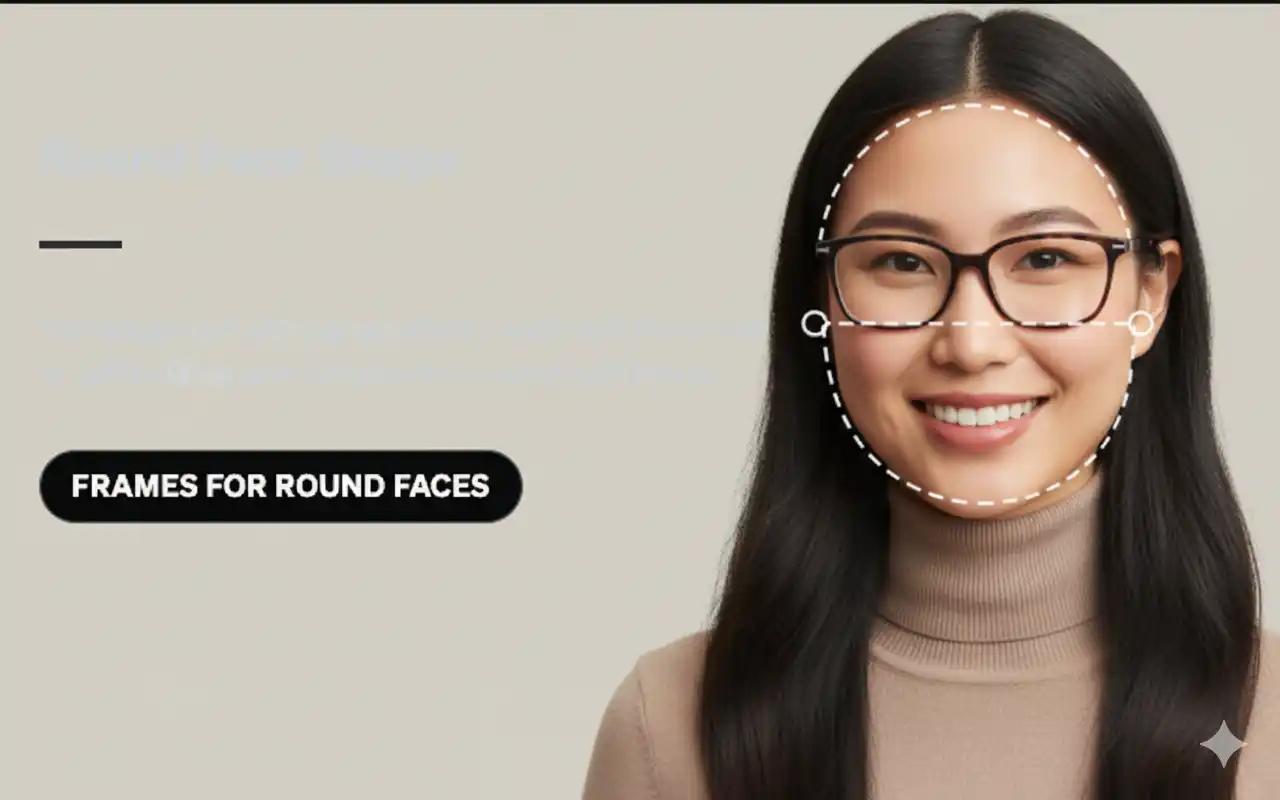
Rounded characteristics
You might explore crisp rectangular lines for contrast, then compare them with softly rounded frames that repeat the facial curves.
AI-generated educational model; style prompt, not a fit result.
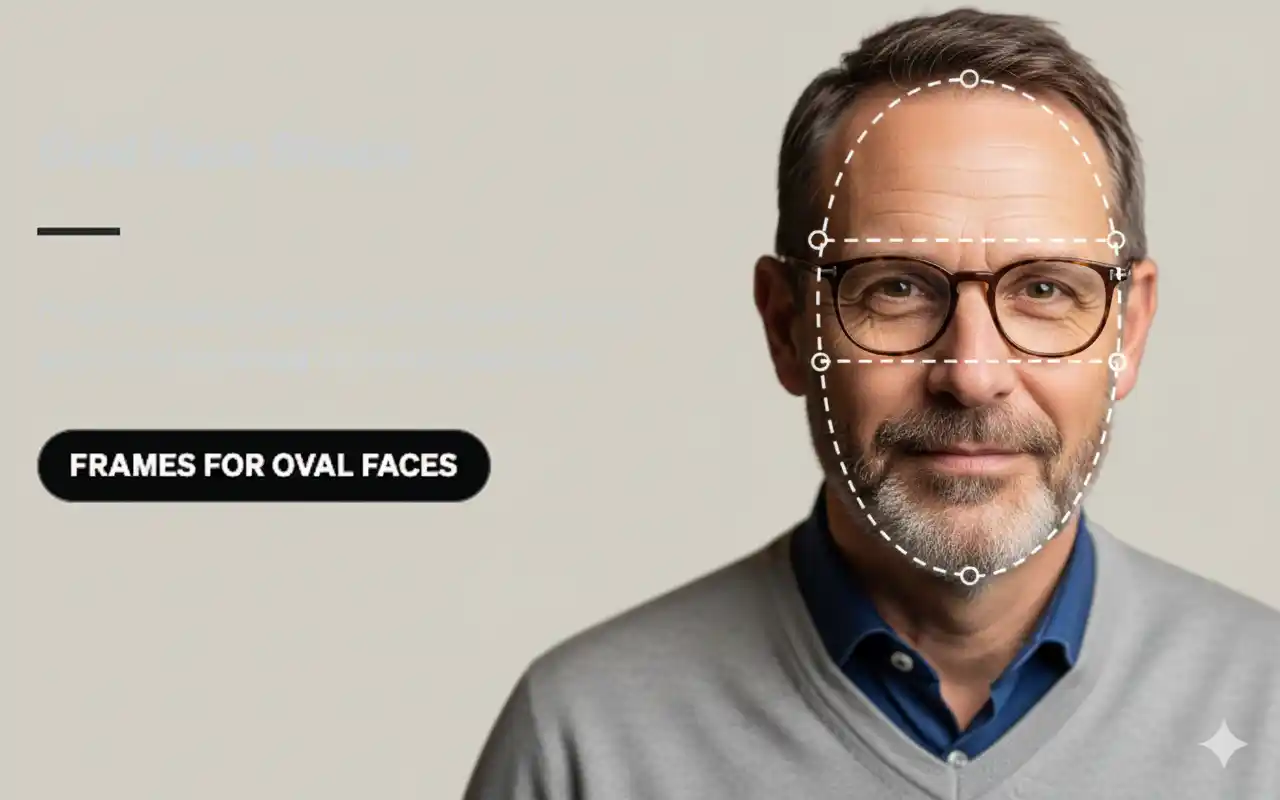
Oval characteristics
Compare frame widths and brow lines across several shapes. Keep the scale comfortable rather than assuming every silhouette will work.
AI-generated educational model; style prompt, not a fit result.
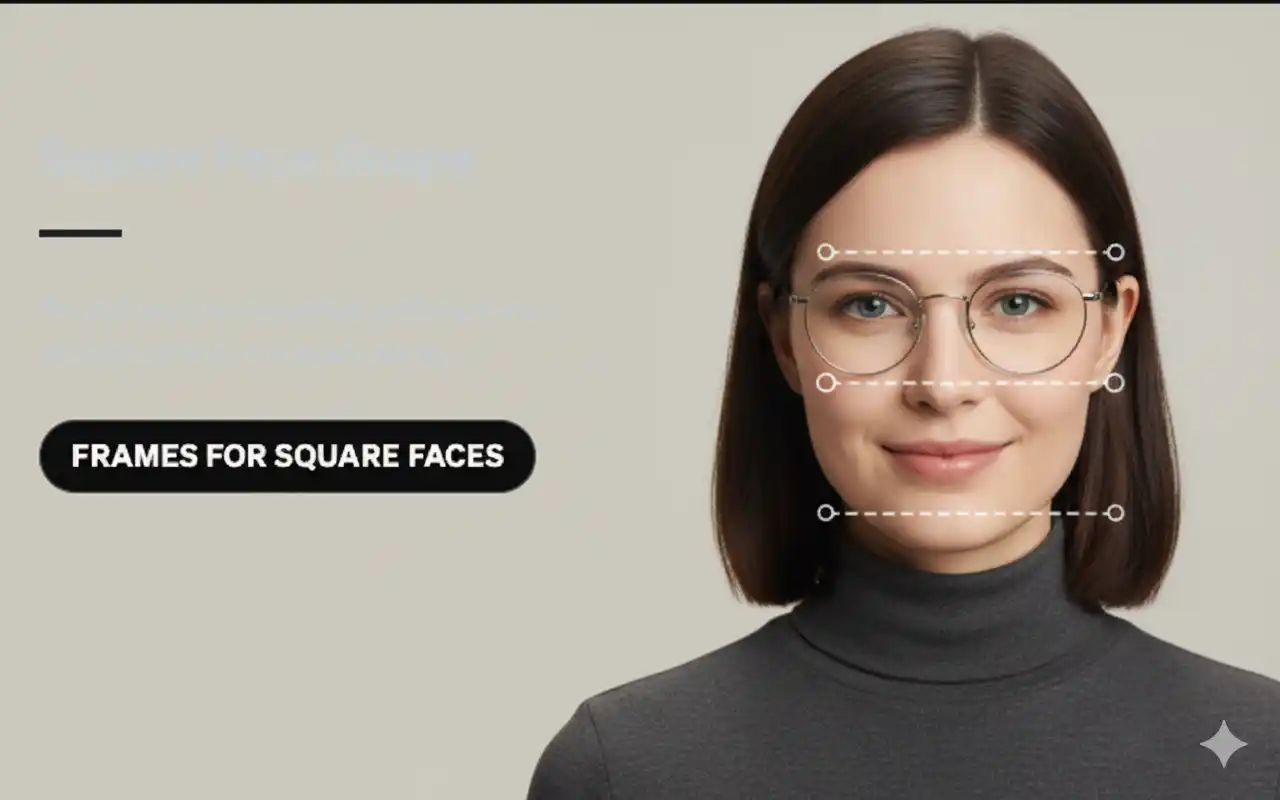
Angular characteristics
Try round or oval frames for contrast, alongside geometric frames that echo the jaw and brow lines.
AI-generated educational model; style prompt, not a fit result.
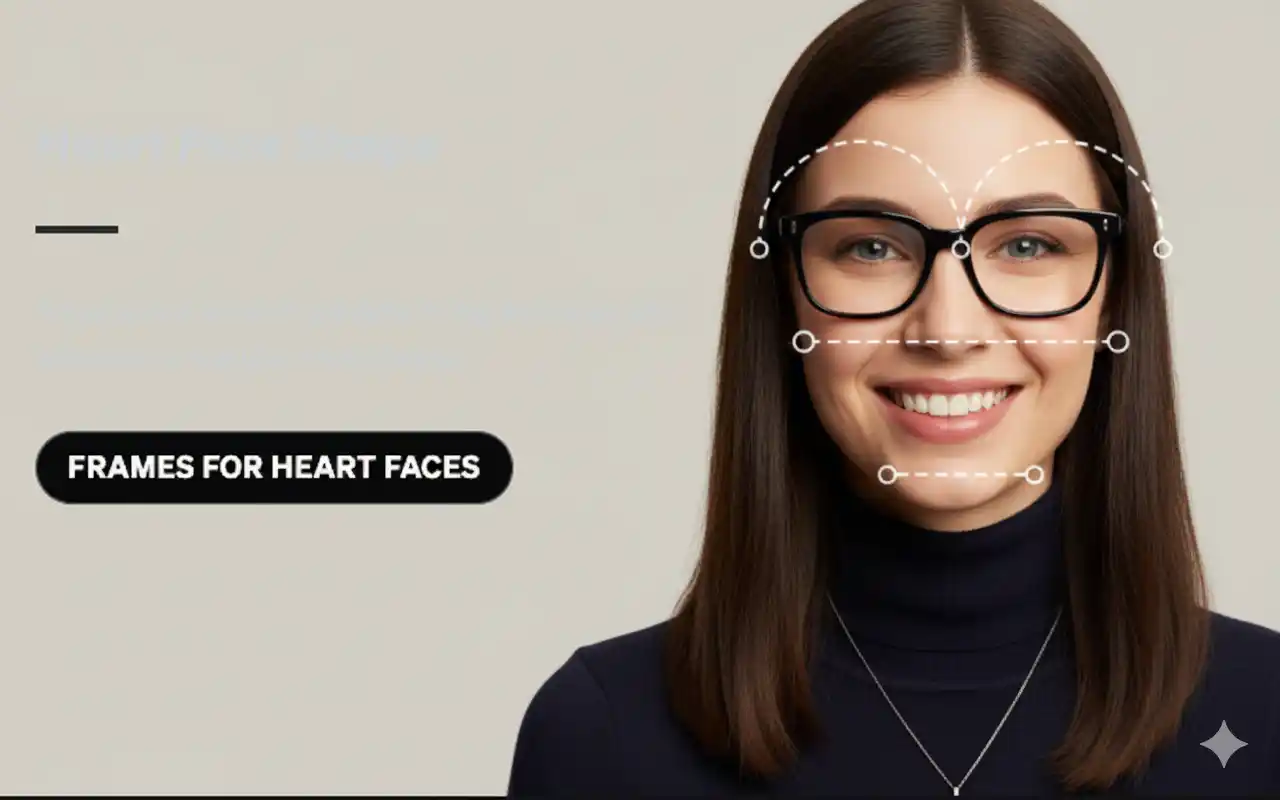
Heart-like characteristics
Explore lighter rims, rounded bottoms and gentle upsweeps, then compare how different brow-line weights feel.
AI-generated educational model; style prompt, not a fit result.
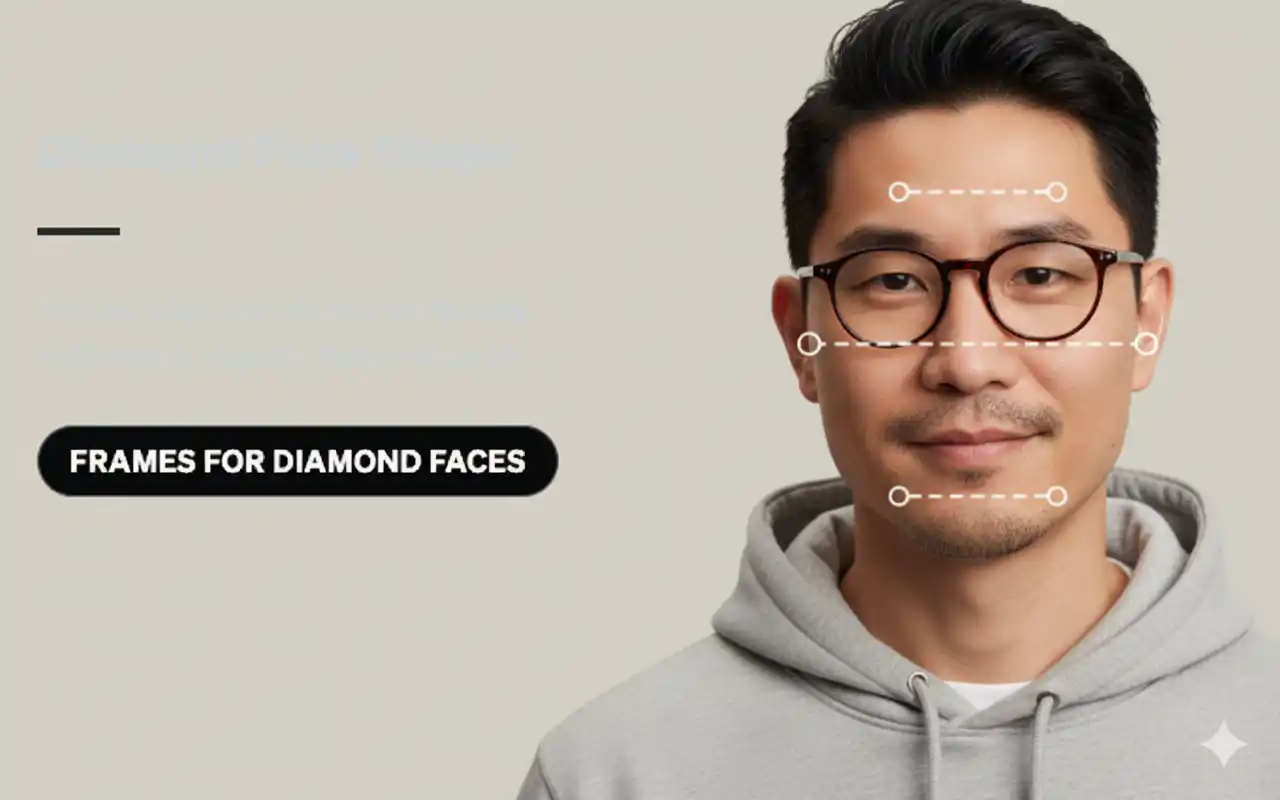
Diamond-like characteristics
Compare oval, softly upswept and geometric frames, paying particular attention to comfortable width at the temples.
AI-generated educational model; style prompt, not a fit result.
Bridge shape, frame width and temple comfort
Faces with the same broad shape can need very different frames. Nose bridge height and width, head width, ear position and cheek placement affect how a frame sits. Labels such as “low bridge fit” can be useful starting points for some wearers, but a label is not a guarantee. Check whether the frame stays level, avoids cheek contact, distributes weight comfortably and remains stable during normal movement.
Temple arms should not bow outward sharply or press behind the ears. A trained professional can heat or adjust many frames, but not every material or design offers the same adjustment range.
Treat color and undertone advice as an experiment
Undertone categories are not precise rules, and lighting or camera processing can change how skin and frames appear. Instead of trying to diagnose one “correct” palette, compare a few families in similar light:
Warm-leaning options
Tortoise, amber, gold, olive or warm translucent colors can be useful comparison points.
Cool-leaning options
Black, silver, navy, plum or clear gray provide a different contrast to test.
Neutral and mixed options
Clear, brown, mixed-metal and softly patterned frames can bridge several palettes.
The real-world check
View frames in daylight and indoor light, with clothing you actually wear, then choose the result you prefer.
Prescription and lens considerations
Frame choice can affect lens thickness, weight, usable viewing zones and how much of the frame enters your field of view. This is especially relevant for stronger prescriptions, prism, progressives and some wraparound designs. An optician or optometrist can explain the options for your prescription and identify frames that allow the needed measurements and lens placement.
For children, prioritize professional sizing, impact-resistant lens advice, stable fit and regular reassessment as they grow. At any age, do not accept persistent headaches, eyestrain, blurred vision, pressure or slipping as a style tradeoff—ask the dispensing practice to check the prescription and fit.
Back to contents ↑Quick reference: what to explore
| Characteristics you notice | Styles you might explore | Also compare |
|---|---|---|
| Rounded | Rectangular or geometric | Rounded frames that echo your features |
| Oval | Several shapes at a comfortable scale | Different brow-line weights |
| Angular or square | Round or oval | Geometric frames that echo the angles |
| Heart-like | Light rims or gentle upsweeps | Different visual weight at the brow |
| Diamond-like | Oval, upswept or geometric | Temple width and cheek clearance |
Rounded
Compare rectangular or geometric frames with rounded silhouettes.
Oval
Compare several shapes at a comfortable scale and different brow-line weights.
Angular or square
Compare round or oval frames with geometric silhouettes.
Heart-like
Compare light rims, gentle upsweeps and different brow-line weights.
Diamond-like
Compare oval, upswept or geometric frames and check temple width.
Frequently asked questions
How do I know what glasses suit my face?
Check physical comfort and lens position first. Then compare several silhouettes at profile size and choose the look you prefer. Face-shape categories are optional styling prompts, not rules.
Can an AI style preview tell me whether prescription glasses fit?
No. It can approximate the appearance of a general style, but it does not measure frame width, bridge fit, temple length, lens position, pupillary distance, fitting height or prescription compatibility.
What measurements matter for glasses fit?
Common considerations include lens width, bridge width, temple length, total frame width, pupillary distance and, for some lenses, fitting height. Vertex distance and pantoscopic tilt can also matter.
Should I choose glasses based on face shape or personal style?
After confirming physical and prescription fit, personal style should lead. Face-shape ideas can help you pick contrasting or echoing silhouettes to compare, but they are not universal rules.
When should I see an optician or optometrist?
Seek professional help for prescription or progressive lenses, high prescriptions or prism, children's eyewear, measurements and adjustments, or persistent discomfort, headaches or eyestrain.
How many frame styles should I compare?
There is no required number. A practical shortlist might include a rounded, angular and upswept option plus one style outside your usual preference, followed by an in-person fit check.
Explore 6 Glasses Styles on Your Selfie
Compare general frame silhouettes before visiting a retailer or optician. Preview results are illustrative and do not represent exact frame dimensions or prescription fit.
Explore glasses stylesAI style preview—not an optical fitting. Results approximate appearance and do not measure bridge fit, temple length, frame width, lens position or prescription compatibility.
Continue with eyewear-specific guidance
Sources and editorial note
- American Optometric Association: 2026 Paraoptometric Skill Standards, Handbook and Exam Candidate Guide (accessed August 11, 2026).
- American Optometric Association: guidance discussing in-person frame and lens fitting (accessed August 11, 2026).
Tryaiphoto created the product demonstration and the AI-generated educational illustrations on this page. They show style concepts, not clinical measurements or guaranteed product fit. This article provides general information and is not individual eye-care advice.